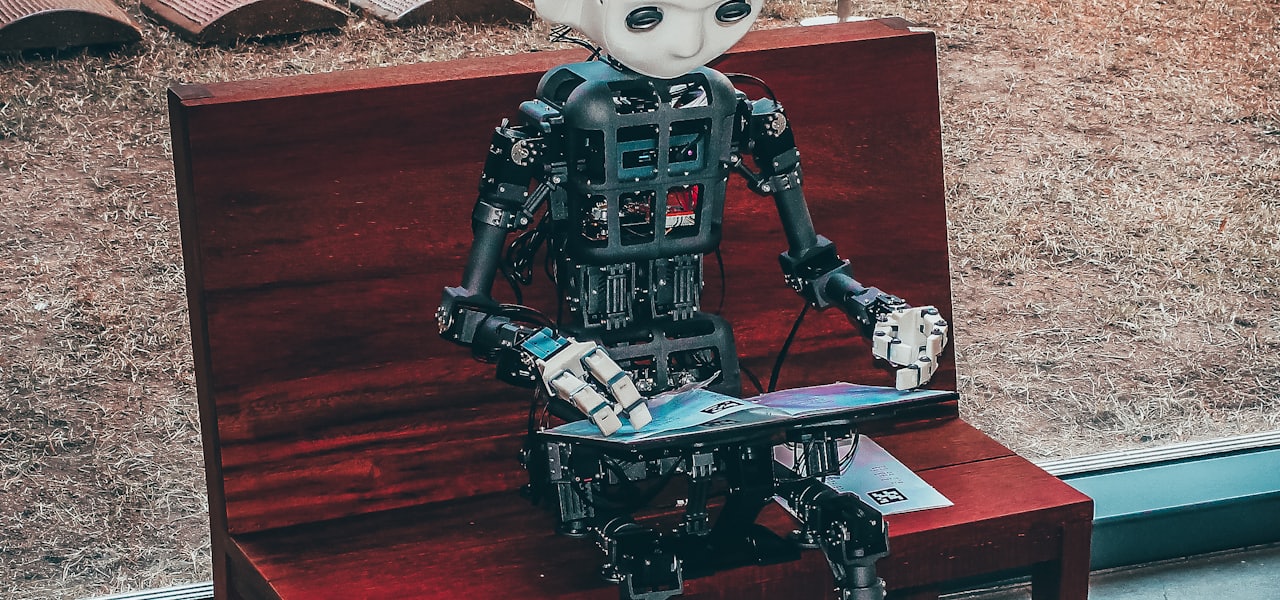
Artificial intimacy is a form of human-AI interaction in which an individual will form social connections, emotional bonds, or intimate relationships with various forms of artificial intelligence, including chatbots, virtual assistants, and other artificial entities. Artificially intimate relationships include not only romances, but parasocial relationships with virtual AI characters and the use of griefbots trained on a dead or otherwise lost individual. Artificial intimacy can arise because humans are prone to anthropomorphism. Responses from these AI models are often designed to simulate human interaction. Individuals experiencing artificial intimacy may exhibit attachment, love and commitment to certain AI models, akin to the bonds typically shared between humans. == Causes == === Perceived responsiveness === Robin Dunbar famously proposed that due to emergence of larger groups of humans, vocal communication and language in humans evolved to replace grooming as a means of bonding, arguing that language was a more efficient way to maintain and strengthen social bonds across wider social settings and networks. Further research in this field leads many psychologists to agree that social cognition, affiliative bonding and language in humans are deeply connected. The interpersonal model of intimacy considers communication to be key in affiliative bonding, suggesting that intimacy develops and deepens through open communication between partners in relationship. Specifically, when individuals communicate emotions and perceive their partner as responsive and caring, feelings of closeness and connection are enhanced, building intimacy. Social penetration theory also aligns with the idea of communication being central to intimacy, by explaining how interpersonal relationships develop through gradual increases in self-disclosure. When the benefits of emotional bonding outweigh the costs of vulnerability, individuals will partake in self-disclosure, opening up to one another. Thereby, the literature can be used to provide a proximate explanation for the emergence of artificial intimacy to understand how the phenomenon occurs. Artificial entities are able to mimic interpersonal communication between humans, which in turn can simulate sensations of intimacy within human users though a perceived sense of responsiveness. The relationship between human and AI does not come with the cost of vulnerability or social rejection, which may make self-disclosure easier than with other humans. Altogether, these factors may lead to the experience of anthropomorphism and formation of affiliative relationships. Skjuve et al's interview study on Replika chatbot users further aligns with this explanation, finding that users' perception of chatbots as "accepting, understanding and non-judgmental" facilitated relationship development between the AI and users, and the act of self-disclosure possibly strengthened relationships. Another study on Replika users' reviews and survey results found users perceived chatbots as emotional supportive companions. This evidence further suggests that the perception of artificial entities as capable of empathy and responsiveness in communication facilitate the development of intimate relationships between users and AI. === Loneliness and coping with negative emotions === Research has suggested that humans evolved social bonds as a result of evolutionary pressures that favored cooperation, information exchange and transmission, and group living. Many studies stress the presence of social bonds to be important for human living: research by Baumeister and Leary suggests that humans have a basic psychological need to form and maintain "strong, stable interpersonal relationships", and that a lack of social bonds or sense of belonging leads to negative psychological and physical outcomes. Eisenberger et al's study on the neuroimaging of brain activity suggests that human brains process social rejection and exclusion similarly to physical pain. Furthermore, Song et al's study found that lonely individuals tend to seek more connections in mediated environments, such as online platforms like Facebook. This was suggested to be as a means to reduce their offline loneliness from a lack of in-person interaction, while also fulfilling a need to communicate. Leading on from this, an ultimate explanation for why humans seek the perceived sense of connection from artificial intimacy is to fulfil an evolutionary need for bonding and belonging. Xie et al's study found loneliness to be a driving factor in chatbot interaction. Herbener and Damholdt's study on Danish high school students found that students who sought emotional support or engaged in reciprocal conversations with chatbots were significantly more lonely than their peers, perceived themselves as having less social support, and used the chatbots to cope with negative emotions. The aforementioned notion that chatbots were perceived to have a positive effect on users' negative emotions is also further supported by other studies. Skjuve et al's study found that chatbot relationships may have a positive effect on users' wellbeing. De Freitas et al ran several studies on the effect of chatbots on loneliness, consistently finding evidence suggesting that interaction with chatbots reduces loneliness in users: It was found that existing chatbot users used AI to alleviate loneliness, having an AI companion consistently reduced loneliness over the course of a week, and reductions in loneliness could be explained by chatbot performance—and specifically whether it was able to make users feel heard. Overall the evidence suggests an innate need for bonding evokes feelings of loneliness in users, who turn to artificial intimacy as a low-cost method alleviate these emotions. While many users report positive experiences, some researchers caution that pursuing artificial intimacy may lead to reduced social motivation, social substitution effects, withdrawal from real-life relationships and difficulty discerning reality from fantasy, which may increase longer-term loneliness and isolation. The long-term psychological and societal impacts remain under active investigation.
LIVAC Synchronous Corpus
LIVAC is an uncommon language corpus dynamically maintained since 1995. Different from other existing corpora, LIVAC has adopted a rigorous and regular "Windows" approach in processing and filtering massive media texts from representative Chinese speech communities such as Beijing, Hong Kong, Macau, Taipei, Singapore, Shanghai, as well as Guangzhou, and Shenzhen. The contents are thus deliberately repetitive in most cases, represented by textual samples drawn from editorials, local and international news, cross-Taiwan Strait news, as well as news on finance, sports and entertainment. By 2023, more than 3 billion characters of news media texts have been filtered, of which 700 million characters have been processed and analyzed and have yielded an expanding Pan-Chinese dictionary of 2.5 million words from the Pan-Chinese printed media. Through rigorous analysis based on computational linguistic methodology, LIVAC has at the same time accumulated a large amount of accurate and meaningful statistical data on the Chinese language and on their diverse speech communities in the Pan-Chinese context, and the results show considerable and important long standing as well as evolving variations. The "Windows" approach is the most innovative feature of LIVAC and has enabled Pan-Chinese media texts to be quantitatively analyzed according to various attributes such as locations, time and subject domains. Thus, various types of comparative studies and applications in information technology as well as development of often related innovative applications have been possible. Moreover, LIVAC has allowed longitudinal developments to be taken into account, facilitating Key Word in Context (KWIC) search and comprehensive study of target words and their underlying concepts as well as linguistic structures over the past 25 years, based on the above mentioned variables of location, time and subject. Results from the extensive and accumulative data analysis contained in LIVAC have enabled the cultivation of textual databases of proper names, place names, organization names, new words, and bi-weekly and annual rosters of media figures. Related applications have included the establishment of verb and adjective databases, the formulation of sentiment indices, and related opinion mining, to measure and compare the popularity of global media figures in the Chinese media (LIVAC Annual Pan-Chinese Celebrity Rosters, later renamed as the Pan-Chinese Newsmaker Rosters). Notable among these are the decades long periodic reviews of the 25 years of annual pan-Chinese rosters since 2000 and compilation of new word databases (LIVAC Annual Pan-Chinese New Word Rosters). On this basis, the analysis of the emergence, diffusion and transformation of new words, and the publication of dictionaries of neologisms have been made possible. A recent focus is on the relative balance between disyllabic words and growing trisyllabic words in the Chinese language, and the comparative study of light verbs in three Chinese speech communities. as well as the link between the language use and use of language as a reflection of epochal change in China. A new LIVAC version 3.1 was launched in February 2024. == Corpus data processing == Accessing media texts, manual input, etc. Text unification including conversion from simplified to traditional Chinese characters, stored as Big5 and Unicode versions Automatic word segmentation Automatic alignment of parallel texts Manual verification, part-of-speech tagging Extraction of words and addition to regional sub-corpora Combination of regional sub-corpora to update the LIVAC corpus, and master lexical database == Labeling for data curation == Categories used include general terms and proper names, such as: general names, surnames, semi titles; geographical, organizations and commercial entities, etc.; time, prepositions, locations, etc.; stack-words; loanwords; case-word; numerals, etc. Construction of databases of proper names, place names, and specific terms, etc. Generate rosters: "new word rosters", "celebrity or media personality rosters", "place name rosters", compound words and matched words Other parts of speech tagging for sub-database, such as common nouns, numerals, numeral classifiers, different types of verbs, and of adjectives, pronouns, adverbs, prepositions, conjunctions, particles marking mood, onomatopoeia, interjection, etc. == Applications == Compilation of Pan-Chinese dictionaries or local dictionaries Information technology research, such as predictive Chinese text input for mobile phones, automatic speech to text conversion, opinion mining Comparative studies on linguistic and cultural developments in the Pan-Chinese regions, especially in a critical period of history in modern China. Language teaching and learning research, and speech-to-text conversion Customized service on linguistic research and lexical search for international corporations and government agencies The above applications are provided by the following functions: Word Segmentation Search Phrase Search Example Sentence Selection Multi-word Comparison Word Cloud
Computational learning theory
In computer science, computational learning theory (or just learning theory) is a subfield of artificial intelligence devoted to studying the design and analysis of machine learning algorithms. == Overview == Theoretical results in machine learning often focus on a type of inductive learning known as supervised learning. In supervised learning, an algorithm is provided with labeled samples. For instance, the samples might be descriptions of mushrooms, with labels indicating whether they are edible or not. The algorithm uses these labeled samples to create a classifier. This classifier assigns labels to new samples, including those it has not previously encountered. The goal of the supervised learning algorithm is to optimize performance metrics, such as minimizing errors on new samples. In addition to performance bounds, computational learning theory studies the time complexity and feasibility of learning . In computational learning theory, a computation is considered feasible if it can be done in polynomial time . There are two kinds of time complexity results: Positive results – Showing that a certain class of functions is learnable in polynomial time. Negative results – Showing that certain classes cannot be learned in polynomial time. Negative results often rely on commonly believed, but yet unproven assumptions, such as: Computational complexity – P ≠ NP (the P versus NP problem); Cryptographic – One-way functions exist. There are several different approaches to computational learning theory based on making different assumptions about the inference principles used to generalise from limited data. This includes different definitions of probability (see frequency probability, Bayesian probability) and different assumptions on the generation of samples. The different approaches include: Exact learning, proposed by Dana Angluin; Probably approximately correct learning (PAC learning), proposed by Leslie Valiant; VC theory, proposed by Vladimir Vapnik and Alexey Chervonenkis; Inductive inference as developed by Ray Solomonoff; Algorithmic learning theory, from the work of E. Mark Gold; Online machine learning, from the work of Nick Littlestone. While its primary goal is to understand learning abstractly, computational learning theory has led to the development of practical algorithms. For example, PAC theory inspired boosting, VC theory led to support vector machines, and Bayesian inference led to belief networks.
Arabic Speech Corpus
The Arabic Speech Corpus is a Modern Standard Arabic (MSA) speech corpus for speech synthesis. The corpus contains phonetic and orthographic transcriptions of more than 3.7 hours of MSA speech aligned with recorded speech on the phoneme level. The annotations include word stress marks on the individual phonemes. The Arabic Speech Corpus was built as part of a doctoral project by Nawar Halabi at the University of Southampton funded by MicroLinkPC who own an exclusive license to commercialise the corpus, but the corpus is available for strictly non-commercial purposes through the official Arabic Speech Corpus website. It is distributed under the Creative Commons Attribution-NonCommercial-ShareAlike 4.0 International License. == Purpose == The corpus was mainly built for speech synthesis purposes, specifically Speech Synthesis, but the corpus has been used for building HMM based voices in Arabic. It was also used to automatically align other speech corpora with their phonetic transcript and could be used as part of a larger corpus for training speech recognition systems. == Contents == The package contains the following: 1813 .wav files containing spoken utterances. 1813 .lab files containing text utterances. 1813 .TextGrid files containing the phoneme labels with time stamps of the boundaries where these occur in the .wav files. phonetic-transcript.txt which has the form "[wav_filename]" "[Phoneme Sequence]" in every line. orthographic-transcript.txt which has the form "[wav_filename]" "[Orthographic Transcript]" in every line. Orthography is in Buckwalter Format which is friendlier where there is software that does not read Arabic script. It can be easily converted back to Arabic. There is an extra 18 minutes of fully annotated corpus (separate from above but with the same structure as above) which was used to evaluated the corpus (see PhD thesis). The corpus was also used to prove that using automatically extracted, orthography-based stress marks improve the quality of speech synthesis in MSA.
NETtalk (artificial neural network)
NETtalk is an artificial neural network that learns to pronounce written English text by supervised learning. It takes English text as input, and produces a matching phonetic transcriptions as output. It is the result of research carried out in the mid-1980s by Terrence Sejnowski and Charles Rosenberg. The intent behind NETtalk was to construct simplified models that might shed light on the complexity of learning human level cognitive tasks, and their implementation as a connectionist model that could also learn to perform a comparable task. The authors trained it by backpropagation. The network was trained on a large amount of English words and their corresponding pronunciations, and is able to generate pronunciations for unseen words with a high level of accuracy. The output of the network was a stream of phonemes, which fed into DECtalk to produce audible speech. It achieved popular success, appearing on the Today show. From the point of view of modeling human cognition, NETtalk does not specifically model the image processing stages and letter recognition of the visual cortex. Rather, it assumes that the letters have been pre-classified and recognized. It is NETtalk's task to learn proper associations between the correct pronunciation with a given sequence of letters based on the context in which the letters appear. A similar architecture was subsequently used for the opposite task, that of converting continuous speech signal to a phoneme sequence. == Training == The training dataset was a 20,008-word subset of the Brown Corpus, with manually annotated phoneme and stress for each letter. The development process was described in a 1993 interview. It took three months -- 250 person-hours -- to create the training dataset, but only a few days to train the network. After it was run successfully on this, the authors tried it on a phonological transcription of an interview with a young Latino boy from a barrio in Los Angeles. This resulted in a network that reproduced his Spanish accent. The original NETtalk was implemented on a Ridge 32, which took 0.275 seconds per learning step (one forward and one backward pass). Training NETtalk became a benchmark to test for the efficiency of backpropagation programs. For example, an implementation on Connection Machine-1 (with 16384 processors) ran at 52x speedup. An implementation on a 10-cell Warp ran at 340x speedup. The following table compiles the benchmark scores as of 1988. Speed is measured in "millions of connections per second" (MCPS). For example, the original NETtalk on Ridge 32 took 0.275 seconds per forward-backward pass, giving 18629 / 10 6 0.275 = 0.068 {\displaystyle {\frac {18629/10^{6}}{0.275}}=0.068} MCPS. Relative times are normalized to the MicroVax. == Architecture == The network had three layers and 18,629 adjustable weights, large by the standards of 1986. There were worries that it would overfit the dataset, but it was trained successfully. The input of the network has 203 units, divided into 7 groups of 29 units each. Each group is a one-hot encoding of one character. There are 29 possible characters: 26 letters, comma, period, and word boundary (whitespace). To produce the pronunciation of a single character, the network takes the character itself, as well as 3 characters before and 3 characters after it. The hidden layer has 80 units. The output has 26 units. 21 units encode for articulatory features (point of articulation, voicing, vowel height, etc.) of phonemes, and 5 units encode for stress and syllable boundaries. Sejnowski studied the learned representation in the network, and found that phonemes that sound similar are clustered together in representation space. The output of the network degrades, but remains understandable, when some hidden neurons are removed.
Cognitive robotics
Cognitive robotics or cognitive technology is a subfield of robotics concerned with endowing a robot with intelligent behavior by providing it with a processing architecture that will allow it to learn and reason about how to behave in response to complex goals in a complex world. Cognitive robotics may be considered the engineering branch of embodied cognitive science and embodied embedded cognition, consisting of robotic process automation, artificial intelligence, machine learning, deep learning, optical character recognition, image processing, process mining, analytics, software development and system integration. == Core issues == While traditional cognitive modeling approaches have assumed symbolic coding schemes as a means for depicting the world, translating the world into these kinds of symbolic representations has proven to be problematic if not untenable. Perception and action and the notion of symbolic representation are therefore core issues to be addressed in cognitive robotics. == Starting point == Cognitive robotics views human or animal cognition as a starting point for the development of robotic information processing, as opposed to more traditional artificial intelligence techniques. Target robotic cognitive capabilities include perception processing, attention allocation, anticipation, planning, complex motor coordination, reasoning about other agents and perhaps even about their own mental states. Robotic cognition embodies the behavior of intelligent agents in the physical world (or a virtual world, in the case of simulated cognitive robotics). Ultimately, the robot must be able to act in the real world. == Learning techniques == === Motor Babble === A preliminary robot learning technique called motor babbling involves correlating pseudo-random complex motor movements by the robot with resulting visual and/or auditory feedback such that the robot may begin to expect a pattern of sensory feedback given a pattern of motor output. Desired sensory feedback may then be used to inform a motor control signal. This is thought to be analogous to how a baby learns to reach for objects or learns to produce speech sounds. For simpler robot systems, where, for instance, inverse kinematics may feasibly be used to transform anticipated feedback (desired motor result) into motor output, this step may be skipped. === Imitation === Once a robot can coordinate its motors to produce a desired result, the technique of learning by imitation may be used. The robot monitors the performance of another agent and then the robot tries to imitate that agent. It is often a challenge to transform imitation information from a complex scene into a desired motor result for the robot. Note that imitation is a high-level form of cognitive behavior and imitation is not necessarily required in a basic model of embodied animal cognition. === Knowledge acquisition === A more complex learning approach is "autonomous knowledge acquisition": the robot is left to explore the environment on its own. A system of goals and beliefs is typically assumed. A somewhat more directed mode of exploration can be achieved by "curiosity" algorithms, such as Intelligent Adaptive Curiosity or Category-Based Intrinsic Motivation. These algorithms generally involve breaking sensory input into a finite number of categories and assigning some sort of prediction system (such as an artificial neural network) to each. The prediction system keeps track of the error in its predictions over time. Reduction in prediction error is considered learning. The robot then preferentially explores categories in which it is learning (or reducing prediction error) the fastest. == Other architectures == Some researchers in cognitive robotics have tried using architectures such as (ACT-R and Soar (cognitive architecture)) as a basis of their cognitive robotics programs. These highly modular symbol-processing architectures have been used to simulate operator performance and human performance when modeling simplistic and symbolized laboratory data. The idea is to extend these architectures to handle real-world sensory input as that input continuously unfolds through time. What is needed is a way to somehow translate the world into a set of symbols and their relationships. == Questions == Some of the fundamental questions to be answered in cognitive robotics are: How much human programming should or can be involved to support the learning processes? How can one quantify progress? Some of the adopted ways are reward and punishment. But what kind of reward and what kind of punishment? In humans, when teaching a child, for example, the reward would be candy or some encouragement, and the punishment can take many forms. But what is an effective way with robots?
Win–stay, lose–switch
In psychology, game theory, statistics, and machine learning, win–stay, lose–switch (also win–stay, lose–shift or Pavlov, named after Ivan Pavlov) is a heuristic learning strategy used to model learning in decision situations. It was first invented as an improvement over randomization in bandit problems. It was later applied to the prisoner's dilemma in order to model the evolution of altruism. In most versions, it starts either with a cooperate, then proceeds as always, or starts with a "probe" of cooperate-defect-cooperate to determine the other player's strategy. A mutual cooperation is regarded as a win. The learning rule bases its decision only on the outcome of the previous play. Outcomes are divided into successes (wins) and failures (losses). If the play on the previous round resulted in a success, then the agent plays the same strategy on the next round. Alternatively, if the play resulted in a failure the agent switches to another action. A large-scale empirical study of players of the game rock, paper, scissors shows that a variation of this strategy is adopted by real-world players of the game, instead of the Nash equilibrium strategy of choosing entirely at random between the three options.